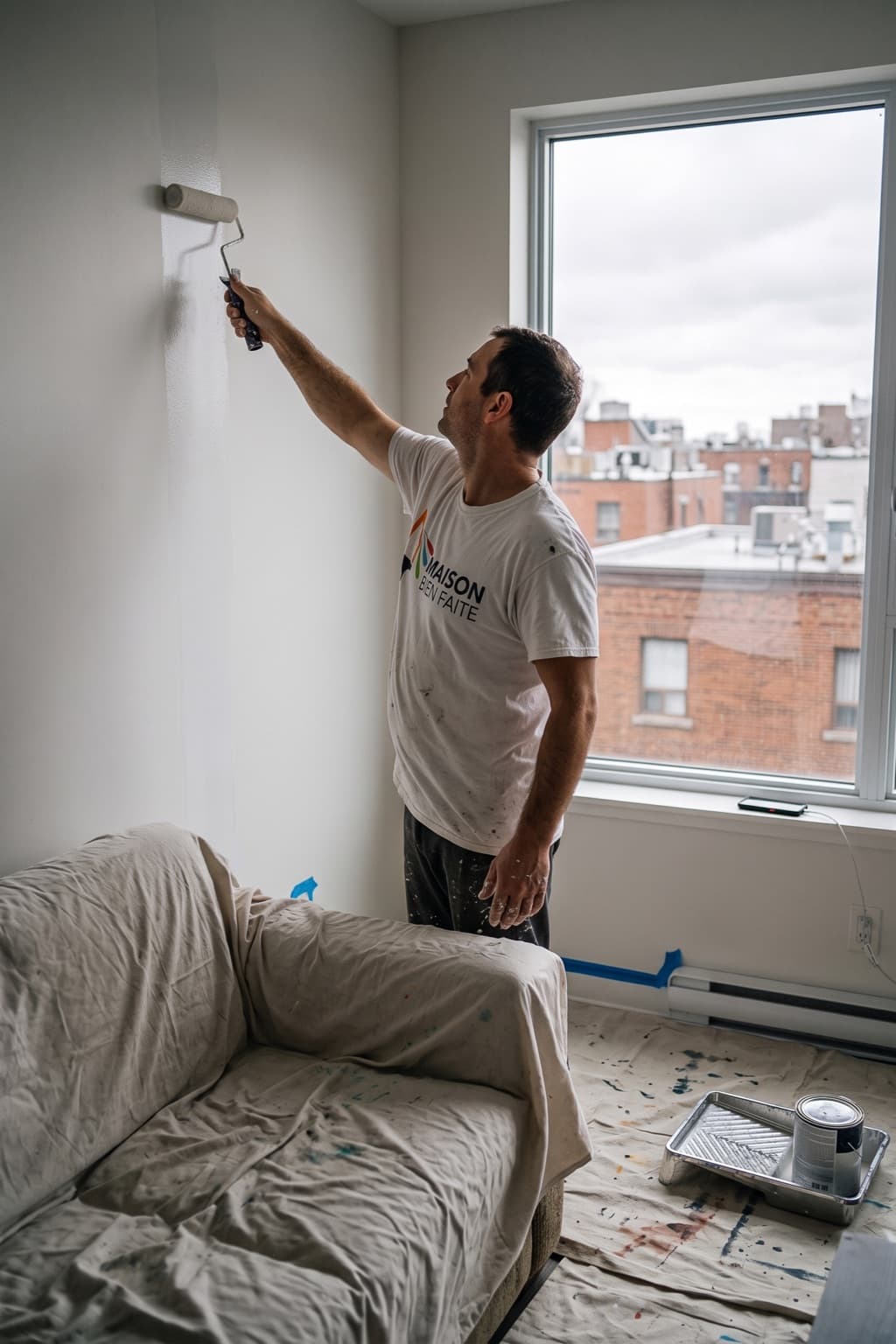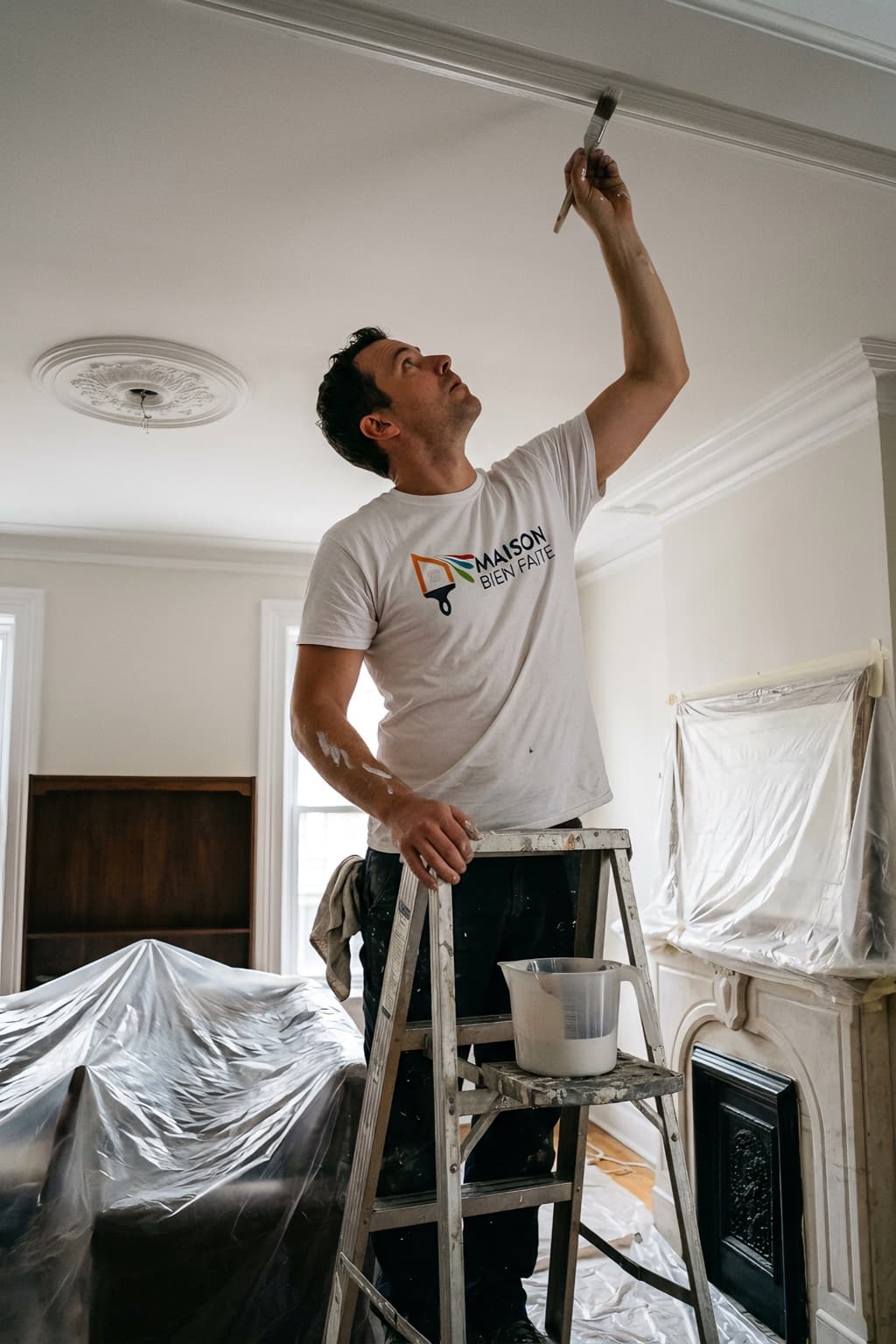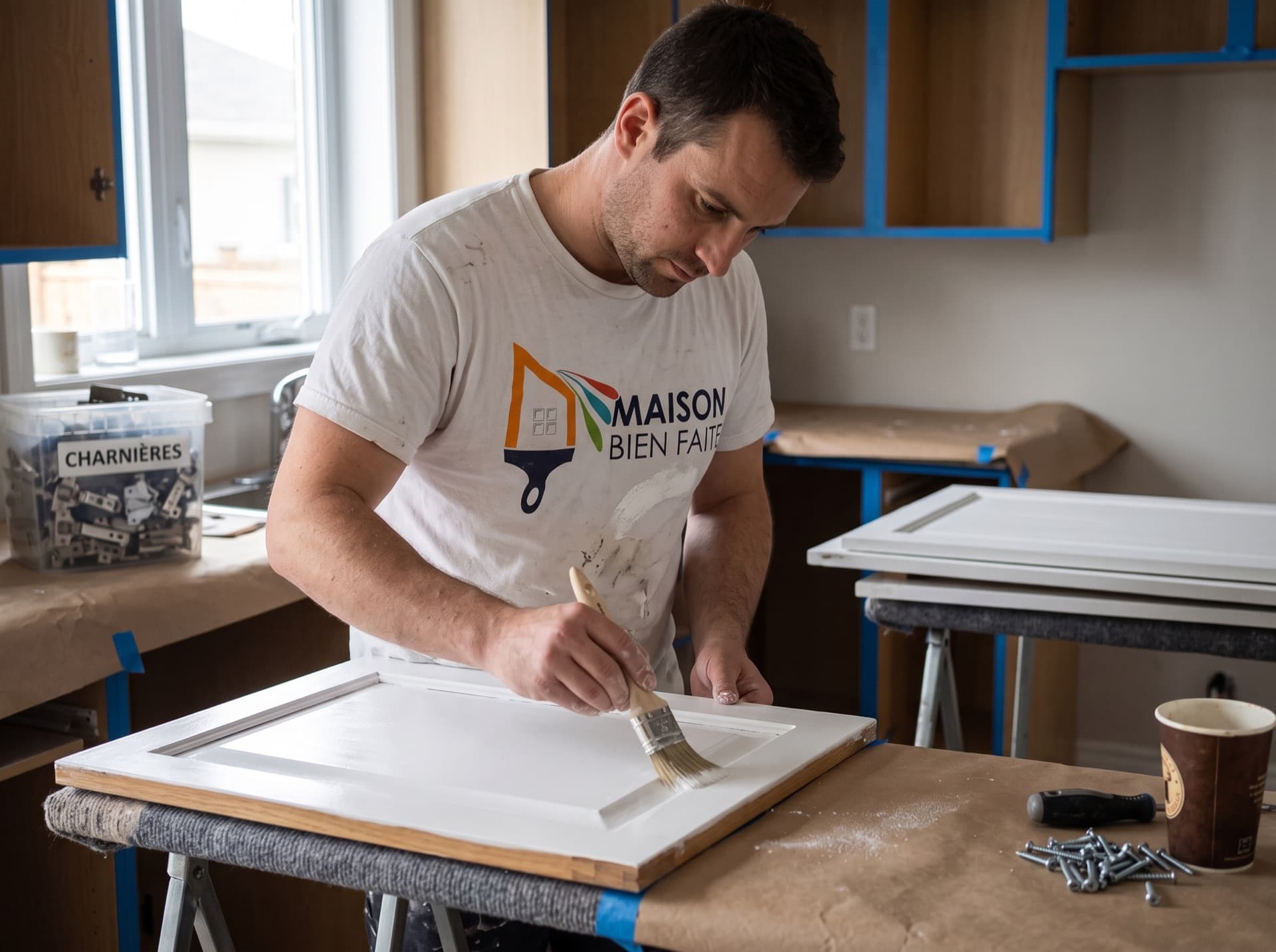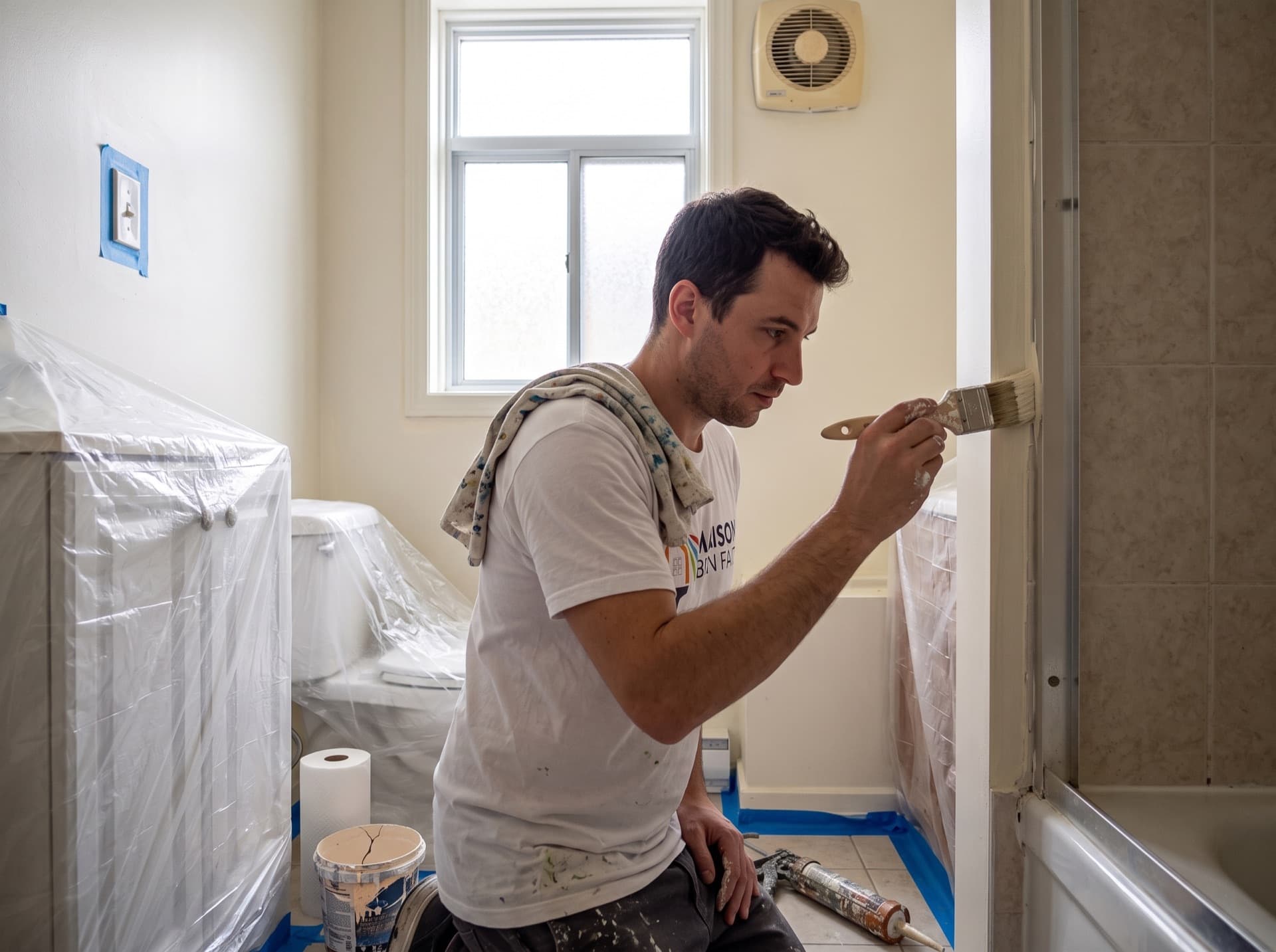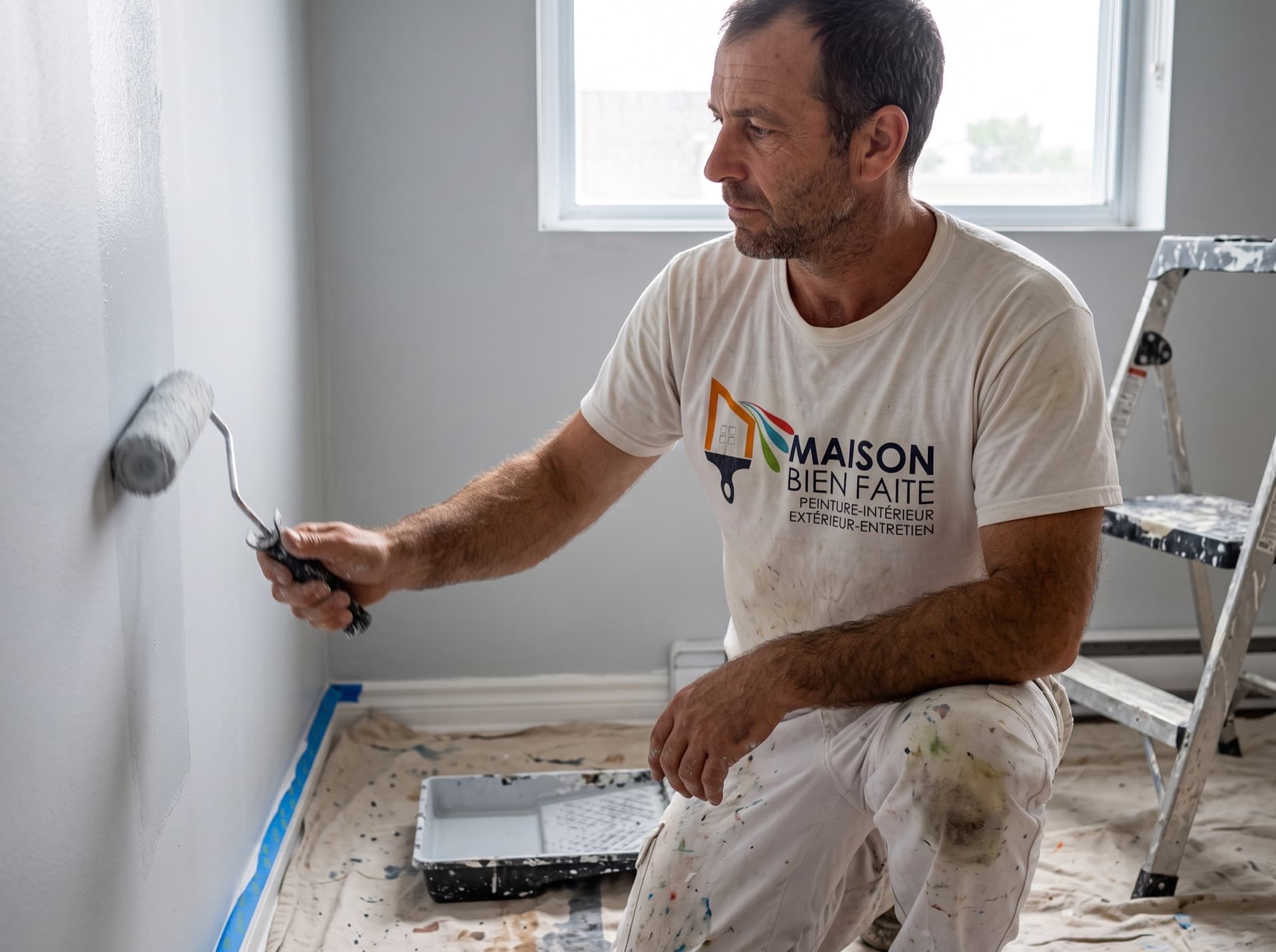

When the temperature drops, we spend more time at home and notice every scuffed wall and yellowed ceiling. Good news: winter is well suited to interior painting, as long as you watch the temperature, humidity, ventilation and drying time.
Why winter works for interior painting
A heated home keeps a steady temperature, day and night, which is what most interior paints need: their technical data sheet lists a minimum application temperature, often around 10 °C. In a normally heated room, that condition is easily met.
Humidity: too dry or too damp?
The air in a heated home is often dry in winter, which speeds up surface drying. On the other hand, a poorly ventilated bathroom or a busy kitchen quickly gets humid, and paint stays fragile there for longer. Run the bathroom fan and the range hood, and avoid drying laundry in the room being painted.
Ventilate without chilling the room
With the windows shut, smells and moisture clear more slowly. Rather than opening the windows wide for hours, which chills the room and slows drying, air it out a few minutes at a time, several times a day. Keep the air exchanger running and the heat at a normal setting during the work and for the days that follow.
Low-VOC paints
Volatile organic compounds (VOCs) are behind much of the smell of fresh paint. Many premium interior paints come in low-VOC versions: when the house stays closed, that choice makes a real difference. At Maison Bien Faite, our paints are chosen to keep odours down, just as on our condo jobs.
Dry to the touch is not cured
A latex paint can be dry to the touch within a few hours, yet it needs several days, even a few weeks, to reach full hardness. Until then, don't scrub the walls and wait before pushing furniture against them. A cold or damp room stretches these times; exact figures are on the product's data sheet.
Planning around the holidays and daily life
Winter also means the holidays, visitors and spring break. Share your key dates when you reach out. The work can move room by room while you live at home. In a condo, also check the building rules: elevator booking, permitted hours and hallway protection.
Where to start?
The entrance and hallway, marked by boots and salt, the kitchen and yellowed ceilings are often the first to need it. Our estimator helps you set priorities during the visit, which is free and no-obligation. Call us at (514) 260-5194: a team member answers immediately, 24 hours a day, 7 days a week.